Lake Country and its boat houses
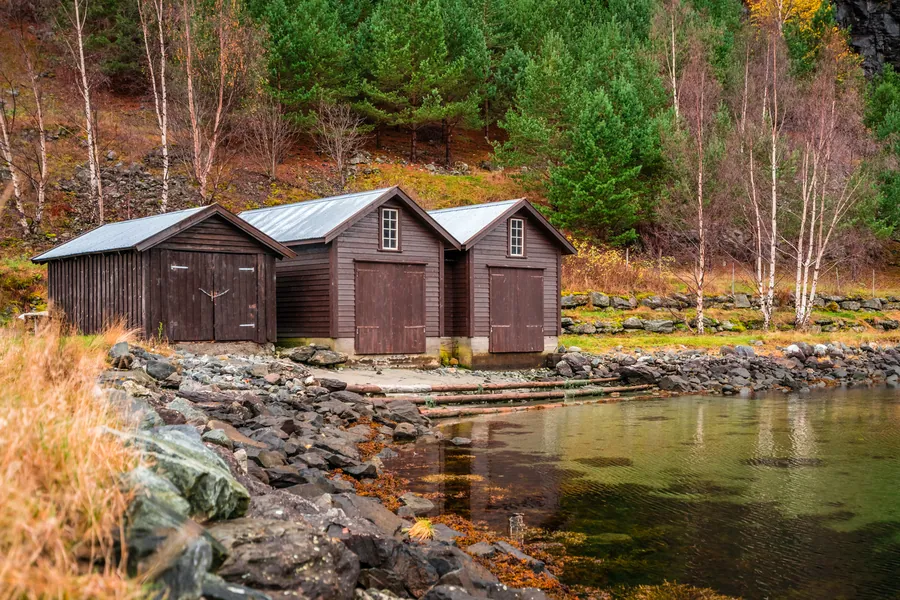
Hartland lies at the center of a district of lakes. Nagawicka, Pine, Beaver, North, Okauchee, and Pewaukee Lakes are all within a few miles, and their shores have been lined with summer houses since the late nineteenth century. Many of those properties have a boat house: sometimes a modest shed at the water’s edge, sometimes a substantial building with living quarters above.
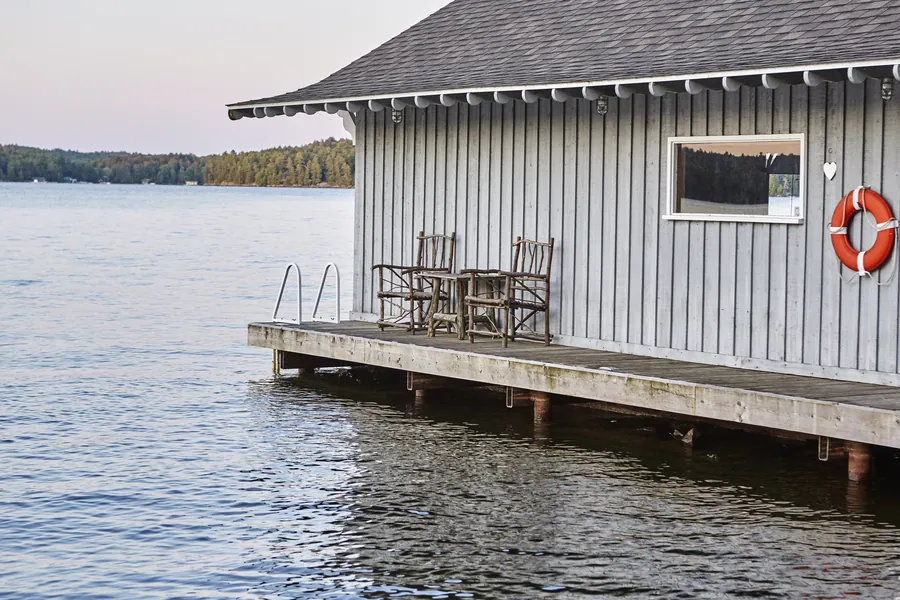
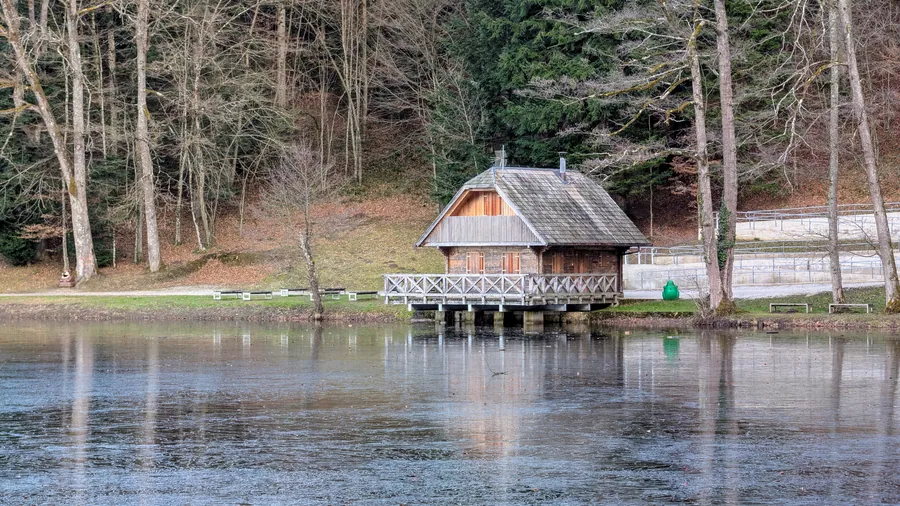
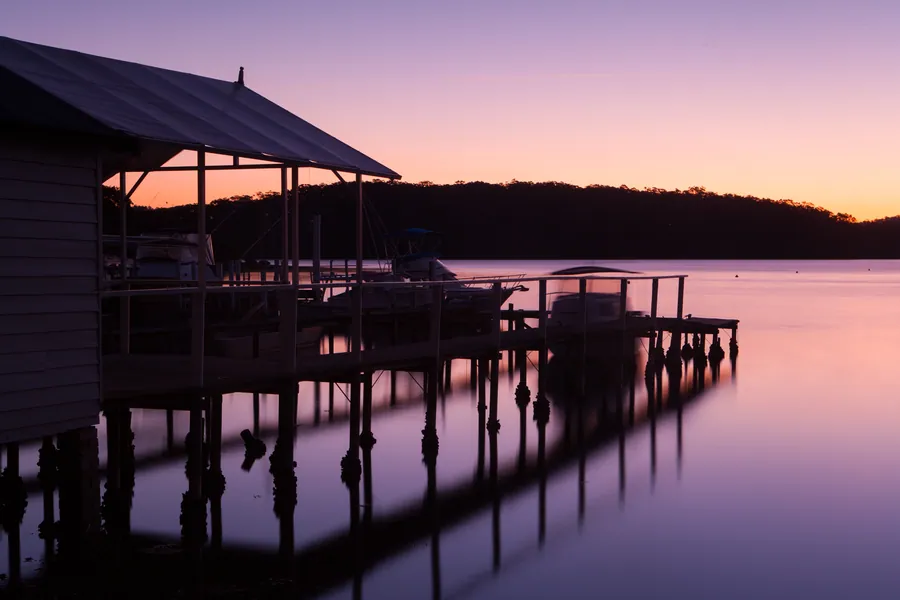
They are of two kinds. A wet boat house stands over the water, and the boat floats within it or hangs on a lift. A dry boat house stands on the shore, and the boat is drawn into it on a rail or trailer. Each may have a door to the lake and another to the land.
Many are old, and a good number are valued precisely because they could not be built today. That makes their upkeep, and the careful renewal of their doors, a matter of some importance to their owners.
A note on regulation
Structures at the shoreline are closely regulated in Wisconsin, by the state, by Waukesha County, and by the individual towns and villages. The rules bear on what may be built, altered, or repaired near the water, and they differ from one municipality to the next. Replacing a door on an existing boat house is generally a matter of ordinary maintenance. Altering the size of an opening or the structure of the building may not be.
We are door specialists and do not give advice on zoning. We would ask any owner contemplating changes to the building itself to consult the local zoning office before work is planned.
What makes the boat house difficult
Moisture
A building over or beside the water is never dry. The air within is humid through the season, fog and spray reach the door, and condensation forms on every cold surface in spring and autumn. Ordinary steel hardware rusts quickly in such conditions, and untreated steel sections corrode from their edges inward.
Exposure
A door facing the lake takes the wind without shelter. On a large lake with a long fetch, that wind carries rain and spray horizontally against the door, and in a storm the pressure on it is considerable.
Ice
In winter, the lake freezes. Ice forms at the base of a lake-side door, and the movement of the ice sheet against the shore can displace the structure itself.
Clearance
Old boat houses were built with low eaves and without any thought of an overhead door. Headroom above the opening and depth behind it are often minimal, and on a wet boat house the track must be arranged so that the open door does not obstruct the boat lift.
Seasonal use
The door may stand closed from October to May and then be used daily. Mechanisms that sit idle through a damp winter are apt to seize.
A building over or beside the water is never dry.
Choosing the door
| Material | Behavior at the water | Remarks |
|---|---|---|
| Aluminum | Does not rust. Light. | Well suited. Available as solid panel or glazed full-view doors. Anodized or powder-coated finishes hold up well. |
| Steel, galvanized and insulated | Durable if the coating is intact | Cut edges and scratches should be touched in. A good choice for the landward door. |
| Fiberglass | Unaffected by moisture. Translucent types admit light. | Light and corrosion-proof. Can become brittle with age and sun. |
| Vinyl | Will not rust, rot, or dent easily | A limited range of styles and colors |
| Wood | Traditional and handsome | Demands rigorous sealing and regular refinishing. See custom wood garage doors. |
| Composite overlay on steel | The look of timber without its vulnerability | A sound compromise for a boat house of traditional character |
For the lake-side door of a wet boat house, we most often recommend aluminum. For a dry boat house or a landward door, a galvanized insulated steel door, or a composite overlay door where appearance is important, serves well.
Where an old building has doors of real character, such as ledged and braced timber leaves, we are cautious about replacing them. They can frequently be repaired, or reproduced as a sectional door of the same outward appearance.
Hardware
The sections are only part of the question. A door at the water fails most often at its hardware, and it is here that a boat house specification differs most from an ordinary one.
- Track, hinges, and brackets of heavily galvanized or stainless steel
- Rollers with nylon wheels on stainless stems and sealed bearings
- Cables of stainless steel, since galvanized cable corrodes at its lower end within a few seasons
- Springs with a protective coating, or of a galvanized or powder-coated type, and lubricated each season
- Fasteners of stainless steel throughout, into sound timber
- Bearings sealed against moisture
- Bottom seal and retainer of materials that will not corrode or harden
The additional cost of corrosion-resistant hardware is modest beside the cost of renewing ordinary hardware every few years.