Garage doors for Hartland and Lake Country, Wisconsin

(000) 000-0000
Hartland Garage Door Service
(000) 000-0000
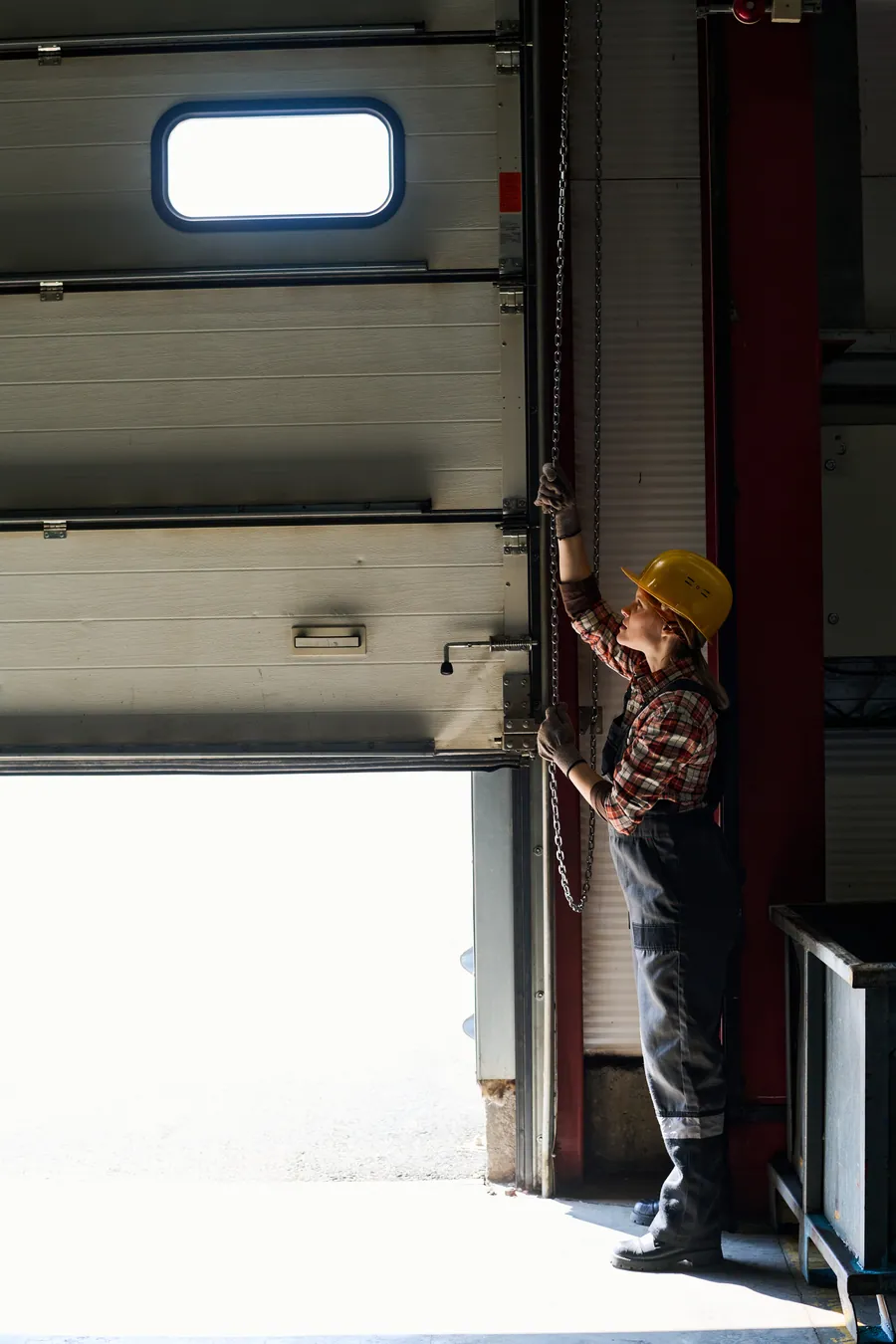
Technician working at the jamb of a partly open overhead door

Residential service

Emergency Garage Door Service in Hartland

Some faults cannot reasonably wait: a door that will not close as evening falls, a vehicle shut in when it is needed, a door hanging from one cable. In those cases, telephone us, and we will tell you plainly how soon we can attend.

(000) 000-0000
First priority
Securing the building
Best contact
By telephone
Availability
Confirmed when you call

What we mean by an emergency

We use the word with some care. An emergency, for our purposes, is a fault that leaves a building open, a person or vehicle unable to leave, or a door in a condition that is dangerous to those nearby. Other faults, however irritating, may be dealt with by appointment.

Circumstance Urgency Advice in the meantime
The door will not close Urgent See the steps below for closing it by hand
A vehicle is shut in and is needed Urgent Do not attempt to lift a double door with a broken spring
The door has left its track or hangs unevenly Urgent Keep clear. Do not operate it.
A vehicle has struck the door Urgent if it cannot be closed Photograph the damage. Do not operate the door.
A spring has broken and the door is closed Soon Leave the door closed. Use another entrance.
The opener has failed but the door moves by hand By appointment Use the manual release
The door is noisy or slow By appointment Arrange an inspection

A plain statement about availability

We give priority to urgent calls and make every effort to attend on the day. We do not advertise attendance at all hours, and we will not promise a time we cannot keep. When you telephone, we will say when we can be with you. If that is not soon enough to resolve the matter before nightfall, we will explain how to make the door safe and secure until we arrive.

For anything urgent, the telephone is better than the form on this page. A conversation allows us to ask the questions that determine what to bring.

What to do before we arrive

If the door will not close

Begin with the photoelectric sensors, which are the small units mounted a few inches above the floor on each side of the opening. Each has an indicator light. If either is flashing or dark, the beam between them is interrupted or the units have been knocked out of line. Clear the opening, wipe the lenses, and turn the affected unit gently until its light is steady.

If the door still refuses, press and hold the wall control. On most operators, this overrides the sensors and will bring the door down so long as the button is held.

Failing that, the door may be lowered by hand, provided the springs and cables are intact. Stand to one side. Pull the manual release cord and guide the door down slowly, keeping hands clear of the joints between sections. If the door feels very heavy or begins to fall, do not try to hold it. Step away.

Once it is down, engage the slide lock if the door has one. Otherwise, a locking plier or a C-clamp fastened to the track just above a roller will prevent the door from being raised from outside.

If a vehicle is shut in

Look at the spring above the door. A visible gap in the coil indicates a fracture. With a broken spring, the full weight of the door must be lifted by hand, and on a double door that is beyond what can be managed safely. Wait for us.

If the springs are whole and the fault is in the operator, pull the release and raise the door by hand. It should lift easily.

If the door is off its track or hanging crooked

Do nothing to it. A door partly out of its track is unstable, and the cables may be carrying uneven loads. Keep children, animals, and vehicles away from the opening until it has been secured.
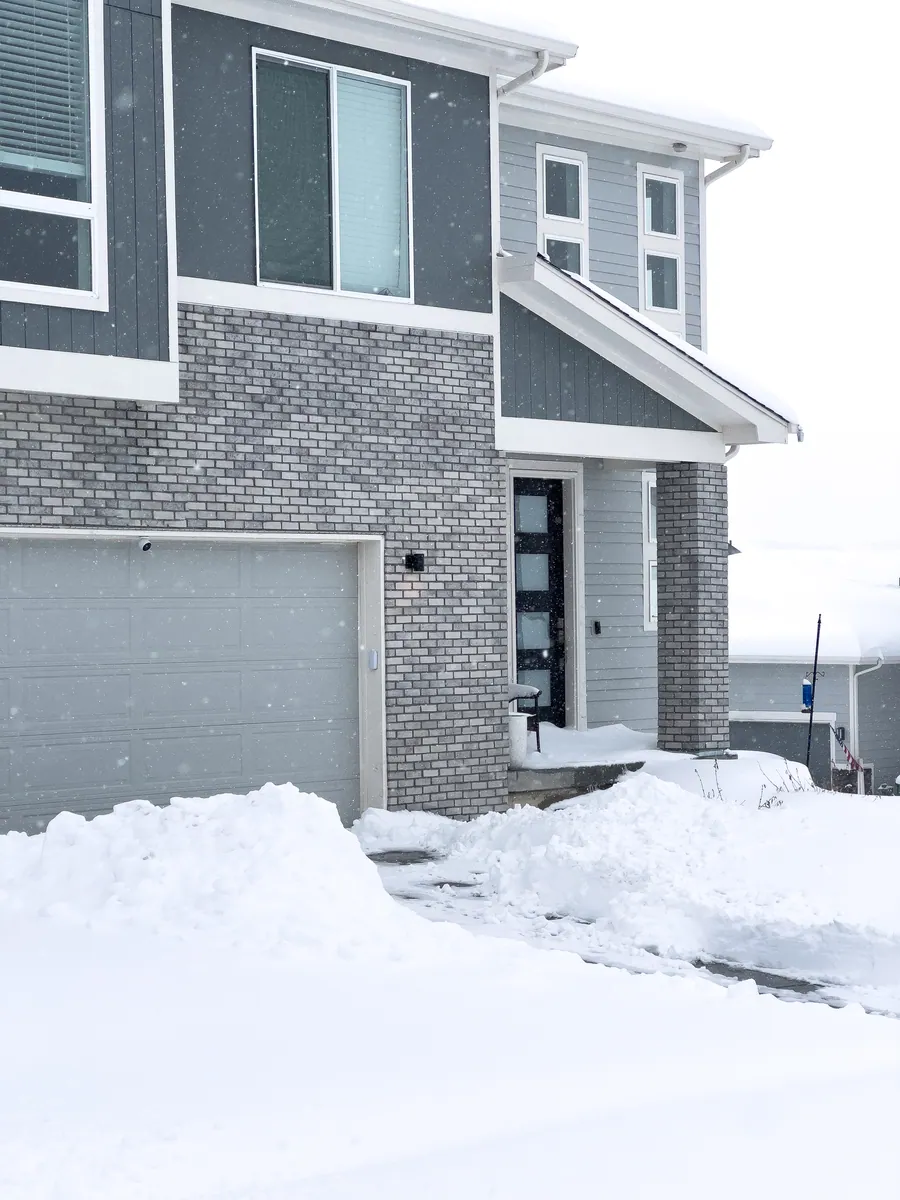
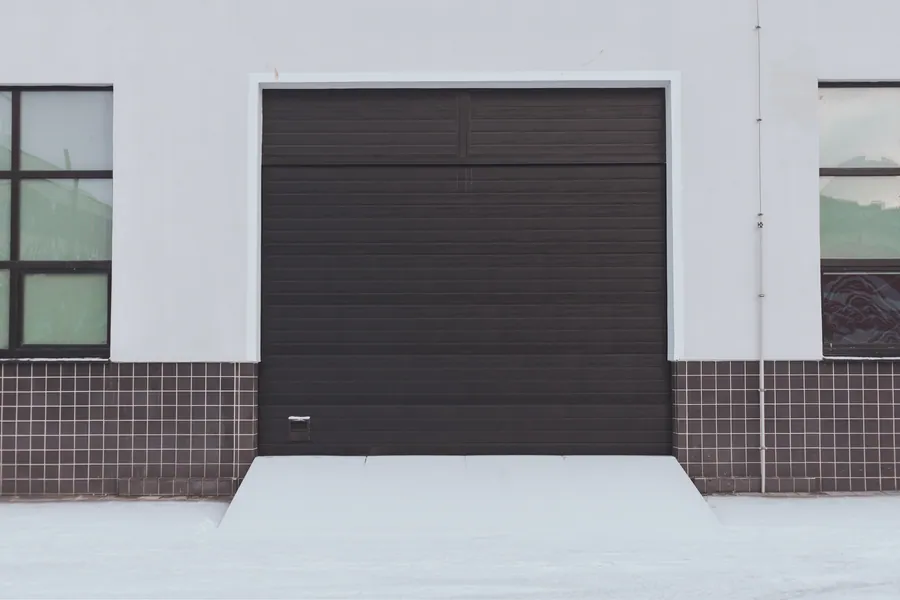
Modern home with a garage door behind deep plowed snow
Reference photo: modern home with a garage door behind deep plowed snow.

How an urgent visit proceeds

  1. The telephone call. We ask whether the door is open or closed, whether anything is visibly broken, and whether a vehicle is involved. A photograph, if one can be sent, is of great help.
  2. Making safe. On arrival, the door is clamped or supported so that it cannot move unexpectedly.
  3. Diagnosis. We establish what has failed and whether anything else was damaged in the failure. A broken spring often dislodges the cables. A struck door often bends the track.
  4. Explanation. The fault, the remedy, and the cost are stated before work begins.
  5. Repair or stabilization. Where the parts are to hand, the repair is completed. Where a section or an uncommon part must be ordered, the door is made secure and operable by hand if possible, and we return when the part arrives.
  6. Testing. Balance, travel, and both safety reversals are checked before we leave.
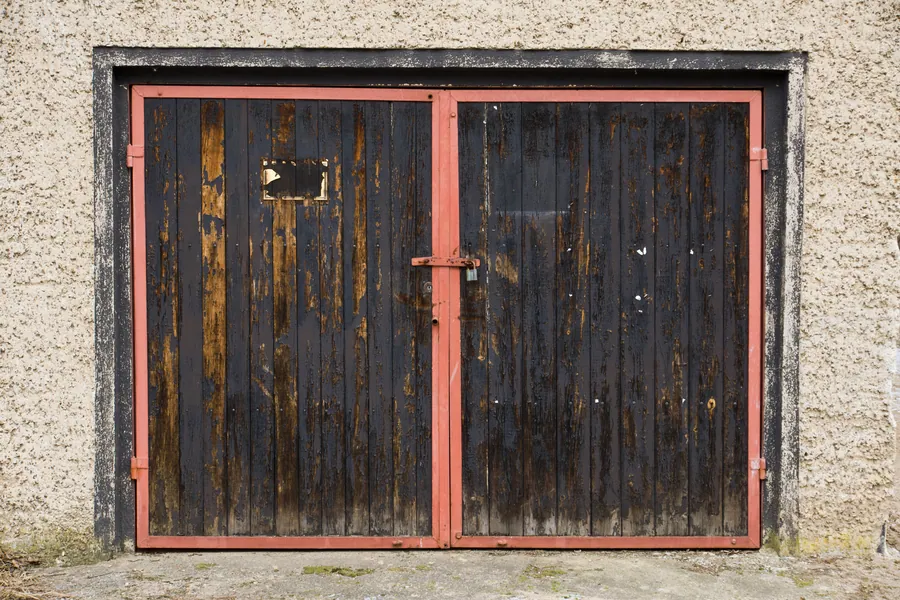
Before and after

A failed, insecure doorway and a door that closes flush

The before photograph shows a pair of old wooden doors with a failed latch and boards that have dried and separated. A doorway in this state cannot be secured and offers little resistance to weather. It stands here for the condition in which an emergency leaves a building: open, and unreliable.

The after photograph shows a dark sectional door closed flush within a clean white wall, its lower edge tight to the threshold. The first object of any urgent visit is to reach that state, which is a door that closes fully and can be locked. The permanent repair, whether springs, cables, track, or a new section, follows from there. The owner’s building is secure in the meantime.

BeforeBefore: Old wooden doors with a broken latch and worn boards
AfterAfter: Dark sectional door closed flush in a white wall
Illustrative comparison using licensed stock photography. It shows the kind of change this service makes and is not a documented customer project.

The faults behind most urgent calls

Broken springs. By a clear margin the most common. The repair is described under garage door repair, and in most cases it is completed in a single visit.

Cables off the drum. The door hangs at an angle and jams. The cables are reset or replaced, and the cause, often a spring or an obstruction, is corrected.

Doors off the track. Usually the result of an impact or of forcing a jammed door. The door is supported, the rollers are returned to the track, and the track is straightened or replaced.

Vehicle impact. Sections, track, and rollers may all be affected. Sections are specific to the make of door and may need to be ordered.

Sensor and operator faults. A door that will not close is very often a sensor out of alignment, which is quickly remedied. Other faults are treated under garage door opener repair.

Frozen doors. In winter, a bottom seal bonded to the floor by ice accounts for a good number of calls, some of them after the operator has already damaged the door in trying to lift it.

Winter emergencies in Lake Country

The coldest weeks of the year bring the greatest number of urgent calls, and the consequences of an open door are more serious then.

An attached garage open to the weather in January loses its heat within minutes. Any plumbing in the wall shared with the house is at risk, and the furnace will labor against the cold entering the building. If a door cannot be closed and we cannot reach you for some hours, hang a tarpaulin or heavy blankets across the opening, close the door between garage and house firmly, and tell us when you call that the opening is exposed.

A door frozen to the floor should be freed before the operator is used. Lukewarm water poured along the seal, or careful work with a plastic scraper, will release it. Dry the threshold afterward. Hot water and metal tools tend to do more harm than good.

Heavy, wet snow drifting against a door can also prevent it from opening. Clear it back before operating the door.

Power failures follow ice storms. Every member of the household should know where the manual release is and how to use it. An operator with battery backup removes the difficulty, and is discussed under garage door opener accessories.

Preventing the next one

Most of the failures that lead to an urgent call announce themselves beforehand. A door that has grown heavy, a cable showing broken strands, a spring thick with rust, a seal gone hard: each is evident at an inspection. An annual visit in the autumn, described under garage door maintenance, is the most reliable way to avoid needing this page again.

Commercial and agricultural premises

A dock door that will not close, or a shop door that will not open at the start of a working day, is an emergency of a different kind. We attend to commercial and farm buildings on the same footing, and the first aim is the same: to secure the building and restore the opening to use.

Questions and answers

Questions about urgent service

Do you attend at night and at weekends?

Availability outside ordinary hours varies. Telephone us and we will tell you when we can attend, and how to secure the door until then.

Is there an additional charge for urgent service?

Please ask when you call. We will state the cost before we set out.

Can I open the door myself if the spring is broken?

A single door can sometimes be raised by two adults, but there will be nothing to hold it open. A double door should not be attempted.

The door closes only if I hold the wall button. Why?

The photoelectric sensors are obstructed or out of alignment. Holding the button overrides them. They should be realigned before the door is used normally.

What if the part is not available on the day?

We secure the door and make it operable by hand where possible, order the part, and return to complete the work.

A car has hit the door. Should I try to close it?

No. Photograph the damage for your insurer and leave the door as it is. Forcing it usually adds to the damage.

Estimates in Hartland and Lake Country

An urgent fault? Telephone us.

Describe the door, the building, and what you would like done. We will reply with any questions and arrange a time to measure or inspect.

(000) 000-0000

Your details are used only to respond to this request.

Call