How a garage door works, briefly
An understanding of the mechanism makes its failures easier to follow.
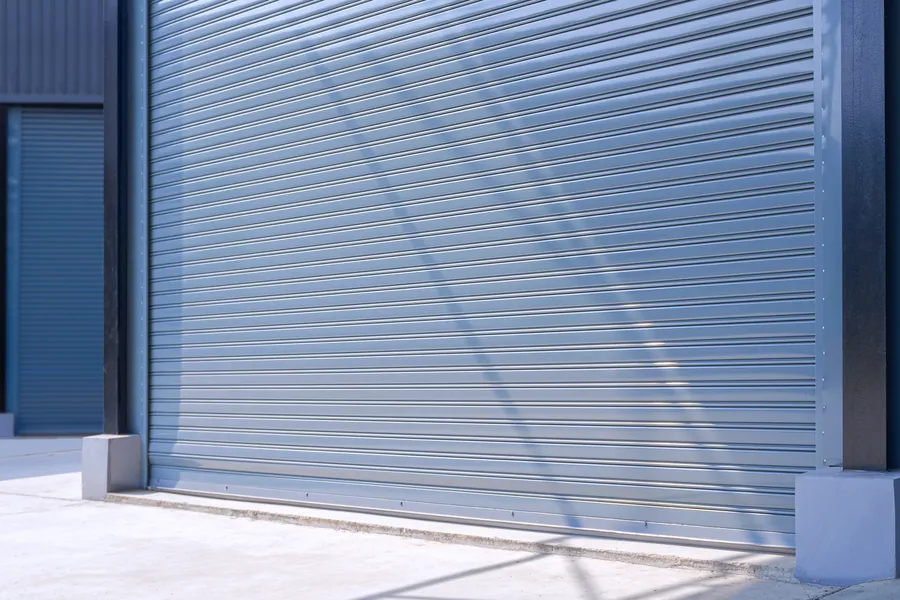
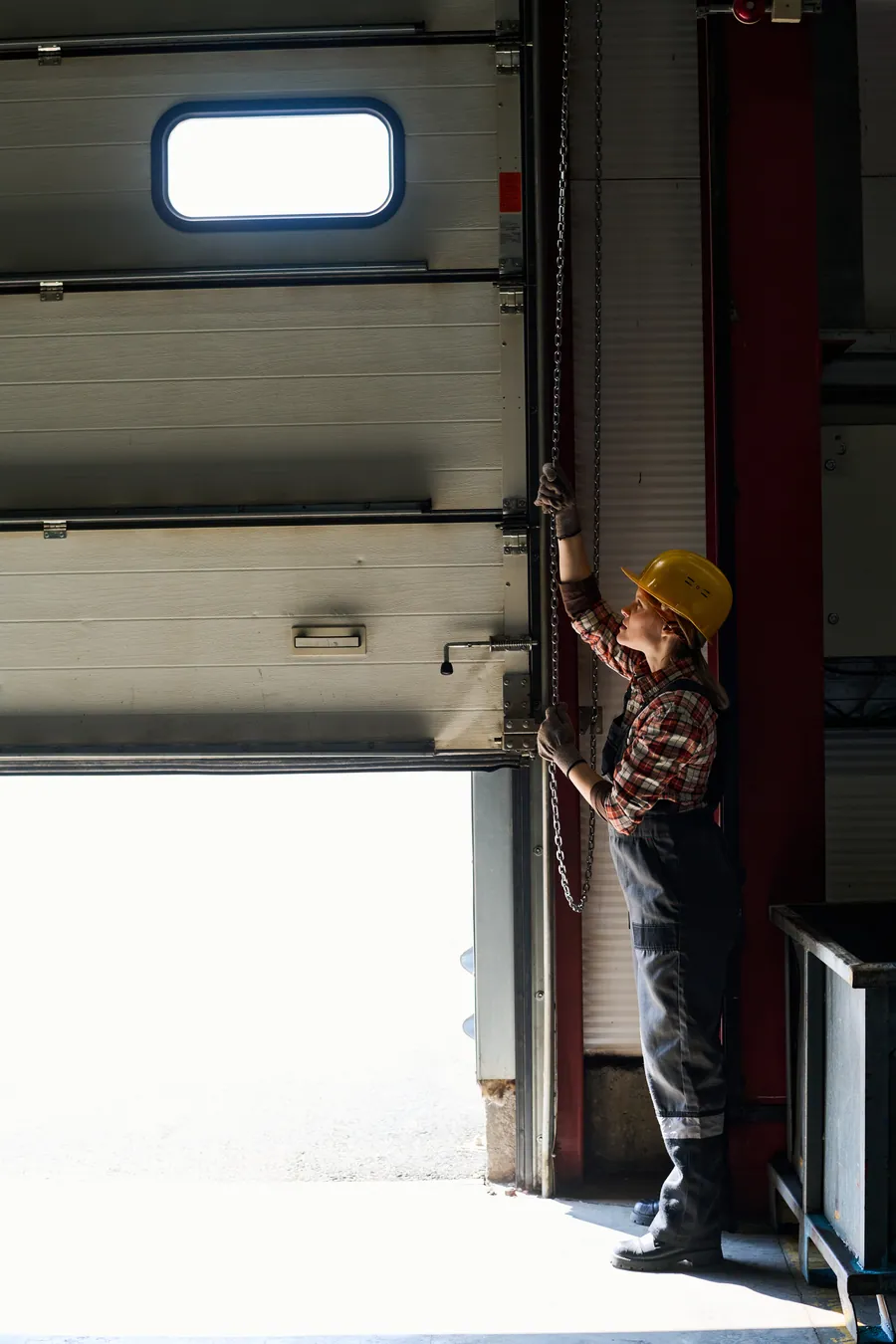
The door is a stack of hinged sections that travel on rollers within a pair of tracks. Its weight, commonly between 130 and 250 pounds for a residential door, is carried by a counterbalance. In the usual arrangement, one or two torsion springs are mounted on a steel shaft above the opening. As the door closes, cables attached to its bottom corners unwind from drums at the ends of the shaft and wind the springs. As it opens, the springs unwind and return that energy, lifting the door.
When the system is in balance, the door may be raised with one hand and will remain wherever it is left. The electric operator, if there is one, merely guides a door that is already nearly weightless.
Almost every fault disturbs that balance, the guidance of the track, or the operator’s control of the door.
The four systems, and how each fails
The counterbalance
This is the source of the majority of repair calls.
Springs have a finite life, measured in cycles of opening and closing. The standard rating is about ten thousand. When a spring fractures, usually with a sharp report, the door becomes too heavy for the operator and very heavy by hand.
Cables corrode at their lower ends, where they sit near a damp floor, and fray. A cable may also leave its drum if the door meets an obstruction or a spring fails in mid-travel. The door then hangs out of level.
Drums and bearings wear slowly. A cracked drum or a rough bearing shows itself as noise, uneven winding, or metal dust beneath the shaft.
The guidance
Rollers lose their bearings or wear flat, and then slide in the track when they should turn.
Hinges wear at their pivots and, on heavily used doors, crack.
Track is knocked out of line by a vehicle, or drifts as its fasteners loosen in the framing over the years. The door rubs, binds, or in the worst case leaves the track.
The envelope
Sections are dented by impact, bowed by an operator working against an unbalanced door, or corroded at the bottom edge.
Seals harden, tear, and admit water and cold.
The operator
Faults in the opener itself are treated under garage door opener repair. It is worth noting here that an operator is very often blamed for a fault that lies in the door.
Our method of diagnosis
We follow the same sequence on every repair call, since a consistent method is the surest way to avoid mistaking a symptom for a cause.
- The owner’s account. What the door did, when, and what was heard. This often identifies the fault before we arrive.
- Visual inspection, door closed. Springs, cables, drums, and bottom brackets are examined for breaks, slack, and corrosion.
- Disconnection of the operator. The door is then tested on its own.
- The balance test. The door is raised by hand to knee, waist, and shoulder height and released at each. A balanced door holds its position.
- The travel test. The door is moved through its full range while we watch each roller, hinge, and track joint, and listen.
- Inspection of the sections. Stiles, struts, the operator bracket, and the bottom rail.
- The operator. Reconnected and tested for travel, force, and both safety reversals.
- The explanation. We show the owner what has failed and why, and state the cost of the repair before it is begun.
An operator is very often blamed for a fault that lies in the door.
Repairs we carry out
- Spring replacement Torsion and extension springs, sized from the door’s weight and replaced in pairs.
- Cable and drum work New cables on both sides, with bottom brackets renewed where corroded.
- Rollers and hinges Worn parts replaced, with nylon rollers recommended for quiet running.
- Track alignment Track reset plumb and level and re-anchored. Damaged lengths are replaced.
- Section repair Struts added to bowed sections. Individual sections replaced where a match exists.
- Weather seals Bottom seal, retainer, and perimeter stops renewed.
- Bearings and shaft Center and end bearings replaced. Bent shafts renewed.
- Rebalancing Spring tension corrected after any change to the weight of the door.