A matter of compatibility
Before any accessory is chosen, one thing must be established: what the existing operator will accept. Openers communicate with their controls by radio, and the frequencies and coding schemes have changed several times over the past thirty years. A remote or keypad must match the system in use. Connected controls, battery units, and automatic locks are more particular still, and many are made for specific models.
We identify the operator first, usually from the label on the motor housing and the color of its programming button. Then we advise on what can be added to it and what cannot. Where an operator is too old to accept a wanted accessory, we say so. It is sometimes more sensible to replace the unit, a matter treated under garage door opener installation.
Means of entry
Exterior keypads
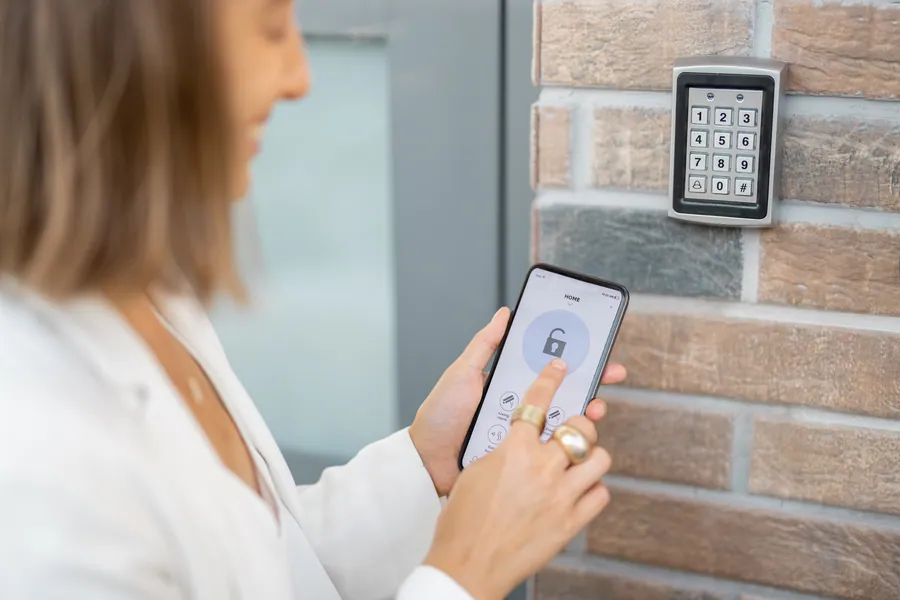
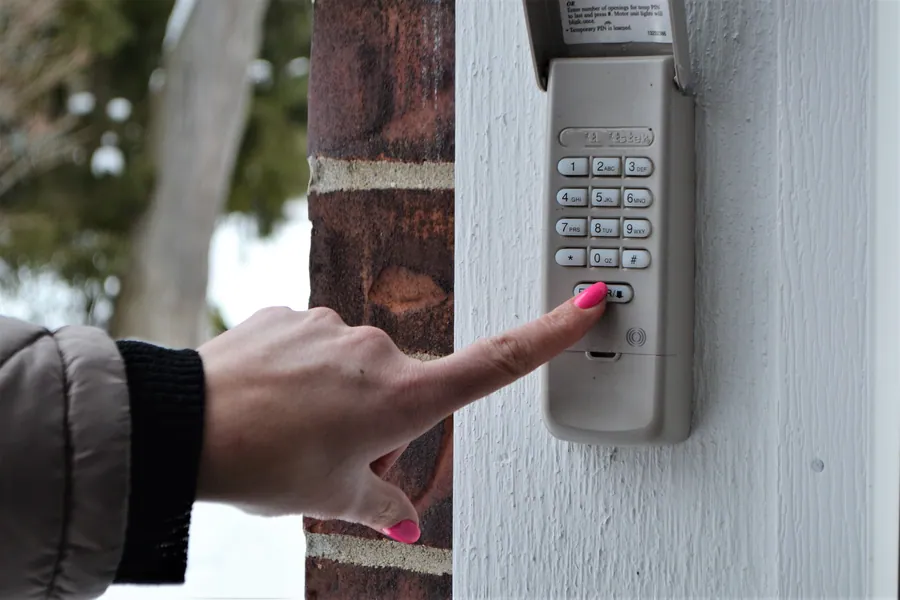
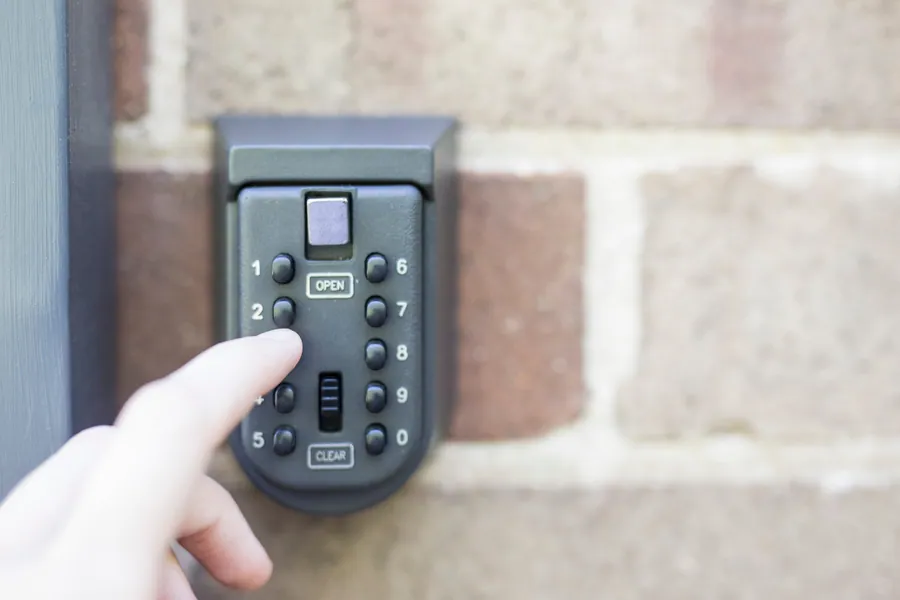
A weatherproof keypad fixed to the door frame opens the door by a numeric code. For households with children coming home from school, for anyone who walks or cycles, and for the occasion when a remote is left in the other vehicle, it is the most useful accessory there is.
Most current keypads permit temporary codes, which may be given to a contractor or a visiting relative and afterward deleted. Some lock out after repeated wrong entries. The buttons should be illuminated and the housing rated for cold, since a Wisconsin winter is hard on inferior units.
We mount keypads at a convenient height on the latch side of the frame, out of the direct path of water from the roof.
Remote controls
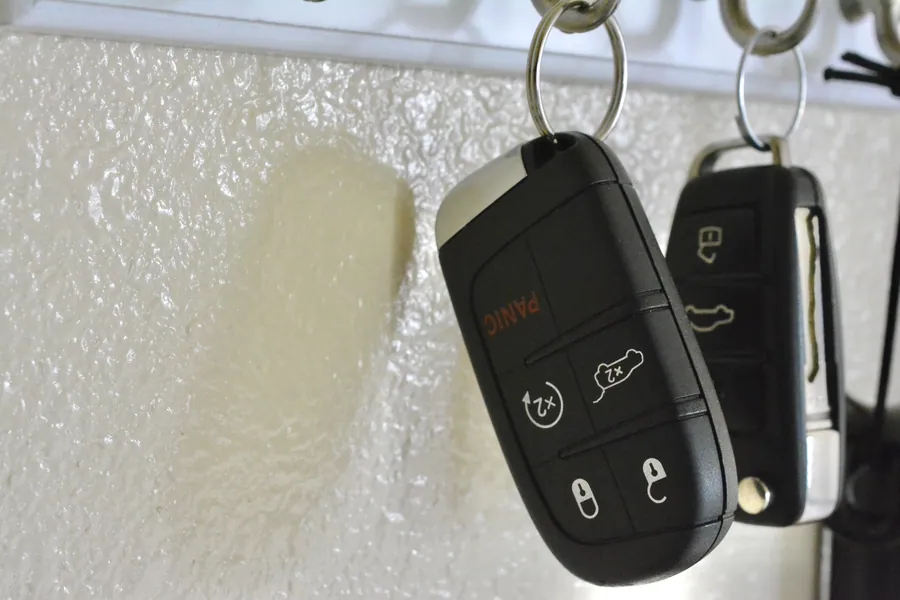
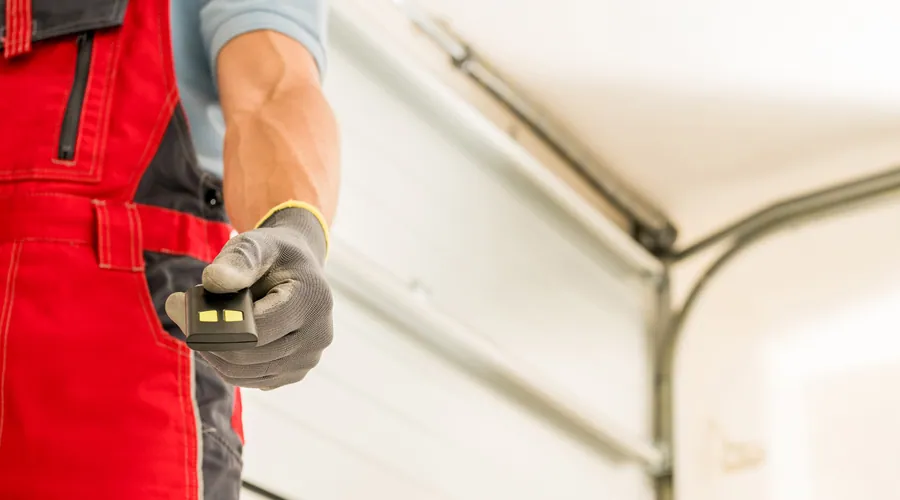
Modern remotes use a rolling code that changes with each use and cannot usefully be copied. They are available in visor and key-ring sizes, with one to several buttons for multiple doors.
A lost remote should be treated as a lost key. The operator’s memory can be cleared and the remaining remotes reprogrammed in a few minutes, after which the missing one will no longer work.
Vehicle controls
Many vehicles have a built-in transmitter. Pairing it with the operator generally takes only a few minutes, though newer operators sometimes require a compatibility bridge for older vehicles. We can advise on the particular combination.
Connected control
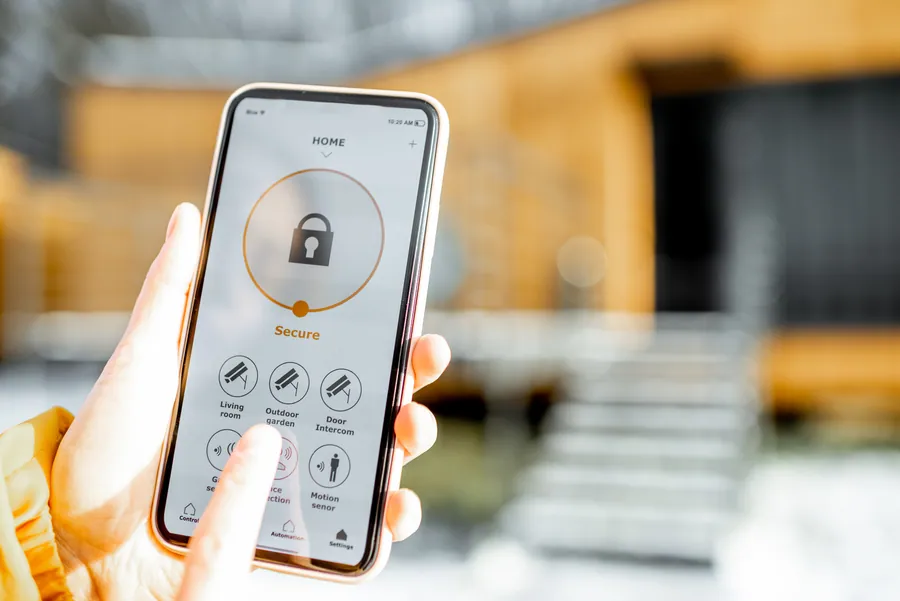
A connected operator, or a retrofit controller added to an existing one, links the door to a telephone application through the household’s wireless network.
Its practical uses are these:
- Confirming, from anywhere, that the door is closed, and closing it if it is not
- Receiving a notice whenever the door opens or has been left open beyond a set time
- Opening the door for a delivery or a visitor in the owner’s absence
- Scheduling the door to close automatically at a given hour each night
- Granting and withdrawing access for members of the household
For a second home on one of the lakes, which may stand empty for weeks, the ability to check the door from a distance has obvious value.
A connected system depends on a reliable wireless signal in the garage, which is often at the far end of the house from the router. We test the signal before recommending one. On the matter of security, reputable systems encrypt their traffic and require a sign-in. We advise a strong, unique password and two-step verification wherever it is offered.
A lost remote should be treated as a lost key.
Power and security
Battery backup
A battery unit, built into the operator or added to a compatible model, runs the door when the mains supply fails. It is intended for a limited number of cycles, enough to get vehicles in and out through an outage of some hours.
In Lake Country, where ice storms and summer thunderstorms both bring down lines, we recommend it for any garage that serves as the main entrance to the house. The battery is a consumable part and should be renewed every few years. Most units give an audible signal when it weakens.
Automatic door locks
An electrically operated bolt, fixed to the track, engages each time the door closes and withdraws before it opens. It prevents the door from being forced upward from outside. It is available for certain operators only.
Surge protection
The circuit board of an operator is vulnerable to voltage surges, whether from lightning or from switching on the supply network. A protector at the outlet is inexpensive insurance, and we suggest one whenever a board is replaced.