Garage doors for Hartland and Lake Country, Wisconsin

(000) 000-0000
Hartland Garage Door Service
(000) 000-0000
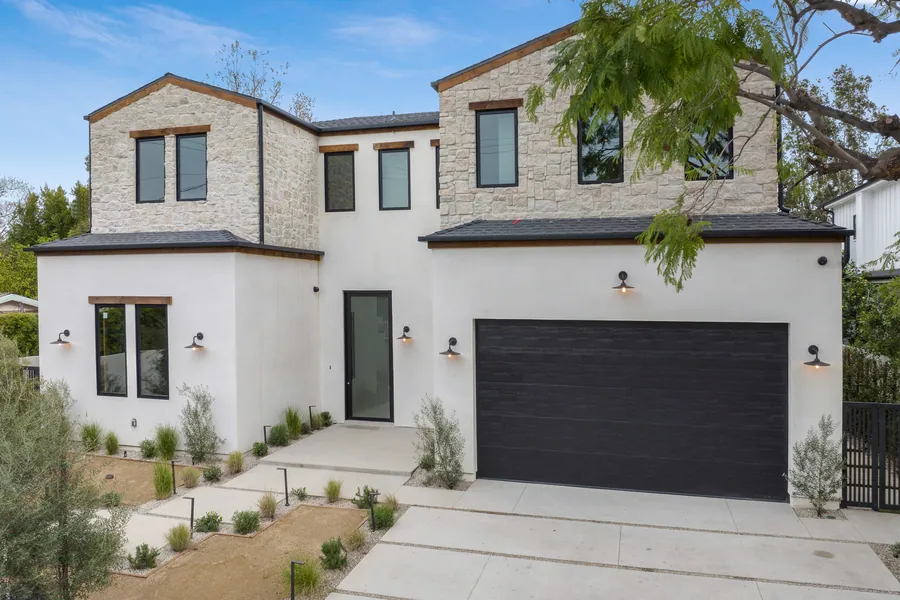
Two-story stone and stucco home with a dark contemporary garage door

Residential service

Garage Door Replacement in Hartland, Wisconsin

Replacing a garage door is partly a mechanical decision and partly an architectural one. The old door has reached the end of its service, and the new one will set the character of the house front for decades.

(000) 000-0000
Assessment
Before any recommendation
Old door
Removed from the property
Hardware
Renewed with the door

Deciding whether the door should be replaced

We are asked to replace doors that need only repair, and to repair doors that ought to be replaced. The distinction is not always obvious to the owner, so we begin with an assessment and say plainly what we find.

A door is a candidate for replacement when its sections have failed. Hardware can always be renewed. Springs, cables, rollers, hinges, and even track are consumable parts with predictable lives. The sections are the door itself, and when they are compromised there is little to be gained by fitting new parts to them.

Conditions that point to replacement

  • Perforating rust. Corrosion along the bottom rail that has gone through the steel. The lowest section carries the lifting brackets, and it cannot be patched reliably.
  • Fatigue at the stiles. Cracks in the vertical members where the hinges fasten, usually on several sections at once.
  • Water damage in wood. Sections that have swollen, split along the grain, or begun to delaminate. A waterlogged wood door grows heavier each year.
  • Discontinued sections. When the manufacturer no longer produces the panel design, a single damaged section cannot be matched.
  • No insulation. A single-skin door on an attached garage is a continuous source of heat loss and noise.
  • Absent safety provisions. Very old doors may lack pinch-resistant joints, and their operators may predate photoelectric sensors.

Conditions that do not

A broken spring, a frayed cable, a noisy roller, a worn bottom seal, or a single dent are matters for repair. So is an opener that has failed on a door that remains sound.

Hardware can always be renewed. The sections are the door itself.

What is replaced, and what is kept

Component Usual practice Reason
Sections Replaced The purpose of the work
Track Replaced Track is made for a particular door thickness and radius. Old track under a new door invites binding and uneven wear.
Springs, drums, cables Replaced Sized for the weight of the new door, which will differ from the old
Rollers and hinges Replaced Supplied with the door and matched to it
Perimeter seals Replaced Old stop molding has usually hardened
Operator Retained if sound A good operator will outlast more than one door
Jambs, header, exterior trim Retained unless decayed Repaired or capped where necessary

Owners occasionally ask whether the existing track might be kept to reduce the cost. We decline to do so. The saving is small, and mismatched track is behind a large share of the doors we are later called to quiet or realign.

Choosing the new door

Replacement is an opportunity to correct whatever was unsatisfactory about the old door, and to reconsider how the garage sits within the architecture of the house.

For warmth

Polyurethane-insulated steel doors of three-layer construction are the standard recommendation for attached garages in this climate. Paired with new perimeter seals, they change a garage from a cold buffer into a moderated space. Plumbing in the adjoining wall, a second refrigerator, and the floor of the room above all benefit.

For quiet

The same construction is quieter, since a bonded sandwich panel does not resonate as a single steel skin does. Nylon rollers reduce noise further.

For appearance

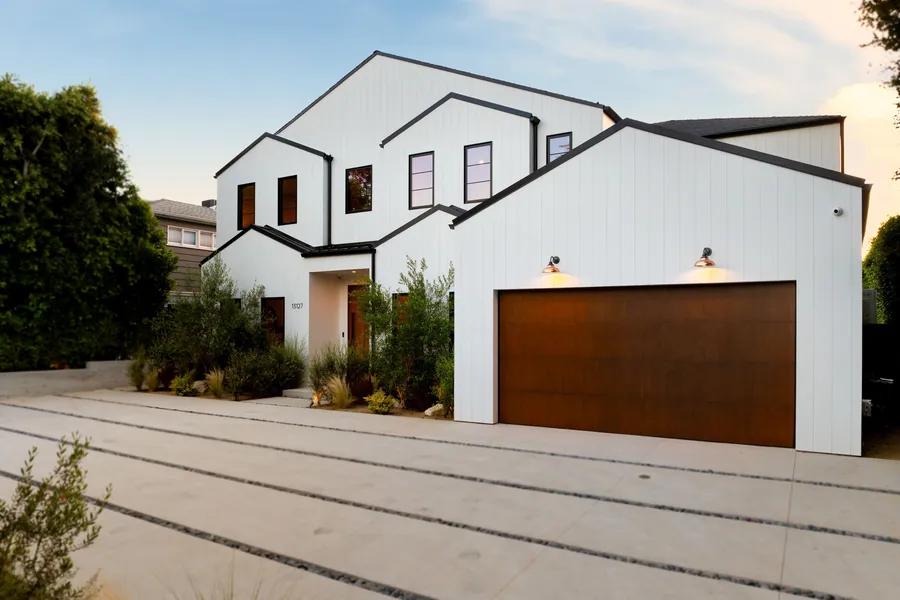
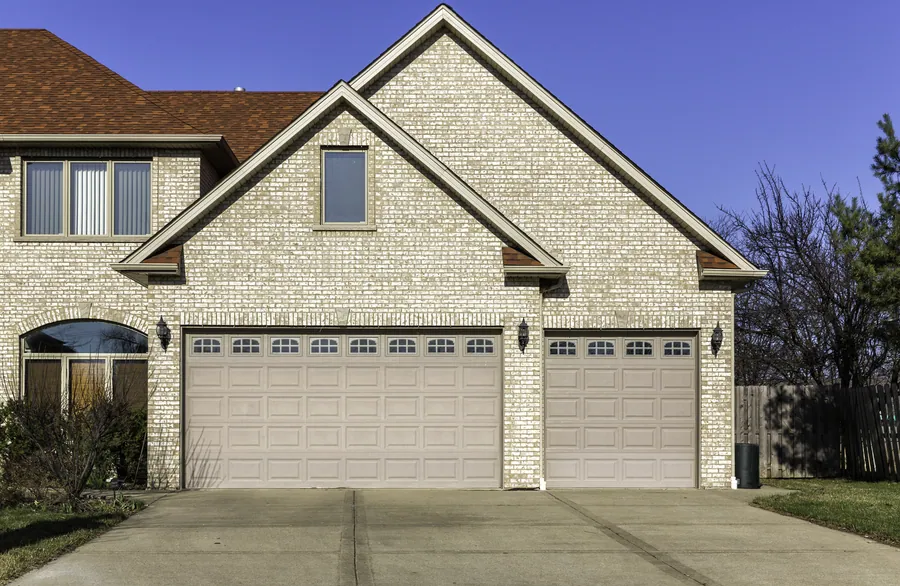
On many houses in Hartland, Delafield, and Chenequa, the garage doors occupy a third or more of the street elevation. A door chosen to suit the house, in its proportions, its panel layout, and its glazing, is among the most effective exterior improvements available for the cost. We would suggest looking at the house’s own windows and trim for cues. A grid of small lites suits a colonial. A plain horizontal band of glass suits a ranch. Board-and-batten overlays suit a farmhouse.

Our pages on raised panel, carriage house, and contemporary doors treat the principal styles in more detail.

For daylight

A glazed top section brings natural light into a space that usually has none. Insulated and obscure glass are available where warmth or privacy is a concern.
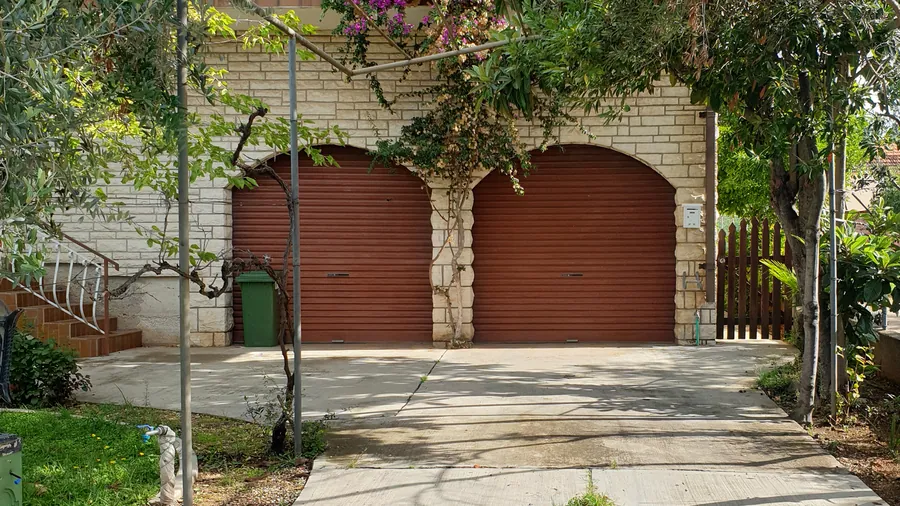
Pair of arched russet garage doors on a stone home
Reference photo: pair of arched russet garage doors on a stone home.

Before and after

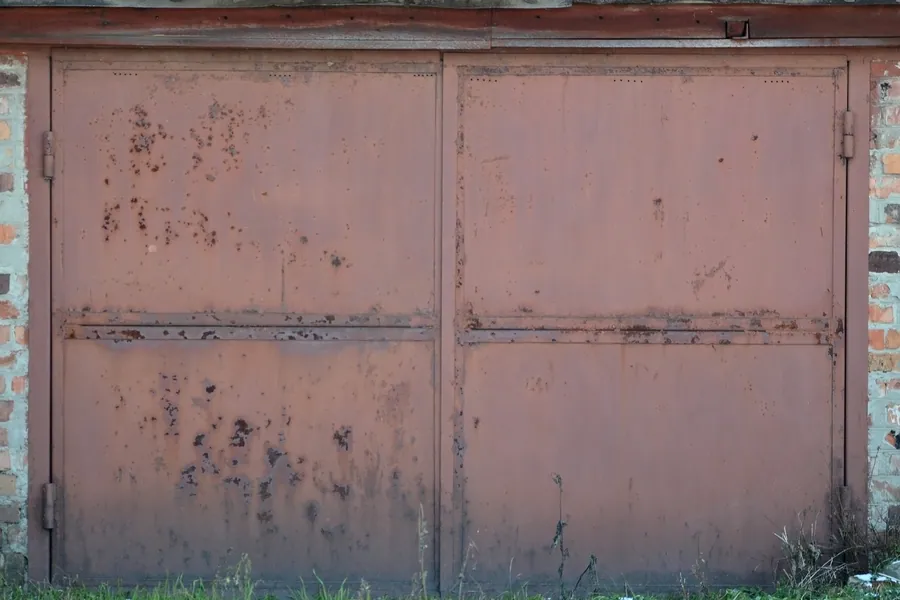
Corroded steel doors give way to raised-panel doors in brick

The before image shows a pair of old steel doors set in a brick wall. The paint has gone, rust has spread across both leaves, and the lower edges have begun to waste away. Doors in this state admit water and cold air freely and cannot be relied upon to secure the building.

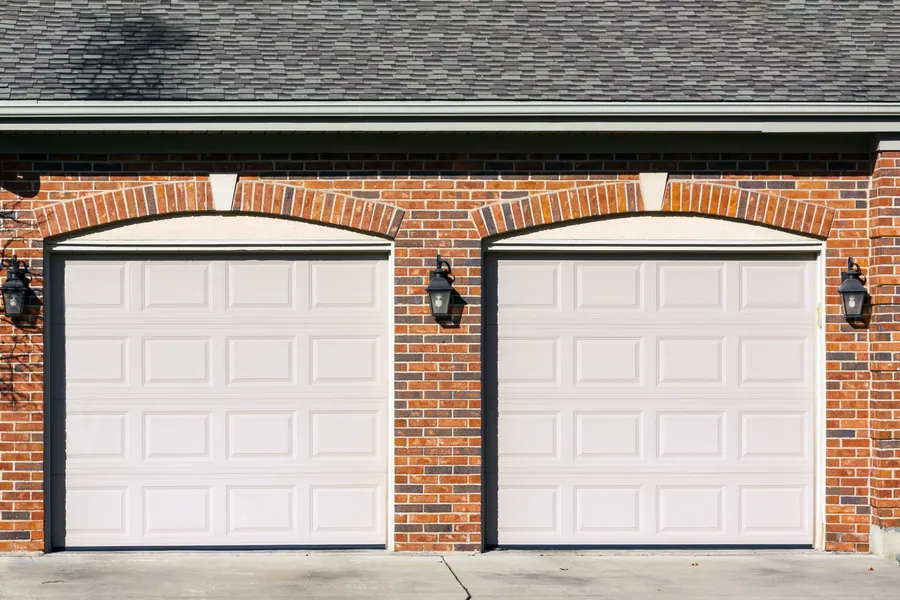
The after image shows two white raised-panel doors in arched brick openings, each sitting square with an even margin all around. A replacement of this kind involves removing the old doors and their hardware, examining the masonry and framing behind them, and fitting insulated sections on new track with springs sized to suit. The owner gains a door that seals, operates quietly, and restores order to the front of the building.

BeforeBefore: Corroded steel garage doors in a worn brick wall
AfterAfter: Two white raised-panel garage doors in arched brick openings
Illustrative comparison using licensed stock photography. It shows the kind of change this service makes and is not a documented customer project.

The day of the work

The existing springs are unwound first. This is the hazardous part of dismantling a door, and nothing else is touched until it is done. The operator is disconnected, the sections are removed from the top down, and the track and spring assembly are taken off the wall. All of it is loaded for removal.

With the opening clear, the framing can be seen properly, often for the first time in decades. We look for decay at the base of the jambs, where meltwater collects, and for any sag in the header. Minor defects are corrected on the spot. Anything more serious is shown to the owner before we proceed.

The new door is then installed in the manner described under residential installation: the bottom section set level, the remaining sections stacked and hinged, the track hung and braced, the springs fitted and wound, the door balanced, and the seals adjusted. The operator is reconnected and its safety systems are tested.

A standard double door is ordinarily in service again the same afternoon.

Old doors in a Wisconsin winter

It is frequently the first hard winter in a new house that persuades an owner to replace an old door, and the reasons are consistent.

Aged vinyl seals lose their flexibility and no longer close the gap at the jambs, so wind and fine snow find their way in. The bottom seal takes a permanent set and stops following the floor. Uninsulated steel offers almost no resistance to the cold, and on a still January night the garage will sit within a few degrees of the outdoor temperature. Thin steel also dents more readily when it is cold.

A new insulated door will not make an unheated garage warm. It will keep it markedly warmer than outdoors, limit drafts, and prevent the slush tracked in by vehicles from freezing solid to the floor. We make no claim about the reduction in a heating bill, since that depends on the house. The improvement in comfort is evident regardless.

One door or both

Where a house has two single doors and only one has failed, the question is whether a match is available. If the manufacturer still produces the design, one door may be replaced and the other left. Some difference in color between new paint and weathered paint should be expected, though it lessens with time.

If the design has been discontinued, replacing both preserves the symmetry of the facade. We will tell you which case applies before any order is placed.

Cost, stated sensibly

The price of a replacement is governed by the size of the door, its construction and insulation, its glazing and finish, and any repair the framing requires. We measure, then present two or three doors at different levels, with the differences explained. There is no obligation to proceed, and where repair would serve as well we will say so.

Questions and answers

Common questions about garage door replacement

Is the old door removed as part of the work?

Yes. The old sections, track, springs, and hardware are taken away when the new door is fitted.

Can the existing opener be reused?

In most cases, provided it operates properly, has working safety sensors, and is adequate for the weight of the new door. We test it before reconnecting.

How long will the garage be without a door?

Usually a matter of hours. Removal and installation take place during a single visit.

Will a new door fit an opening of unusual size?

Doors can be ordered to the dimensions of the opening, which generally avoids any need to alter the framing.

Does a new door add value to a house?

Garage door replacement is consistently reported among the exterior projects that recover a good proportion of their cost at resale. We would add only that the door should suit the house.

Should the weatherstripping be replaced as well?

It is replaced as a matter of course. New perimeter seals are part of every door we fit.

Estimates in Hartland and Lake Country

Uncertain whether to repair or replace? Ask for an assessment.

Describe the door, the building, and what you would like done. We will reply with any questions and arrange a time to measure or inspect.

(000) 000-0000

Your details are used only to respond to this request.

Call