
What a garage screen is for
The garage is, for many households, the largest room in the house and the least used. It has a concrete floor that stays cool, a wide opening to the outdoors, and shade. With the door raised on a June evening, it would be an excellent place to work, to exercise, to let children play, or to sit with friends, were it not for the insects and the want of privacy.
A garage door screen is a framed or tensioned mesh that closes the opening while the door is up. Air and light pass through. Insects, leaves, and blown debris do not. From the street, by day, the interior is largely hidden. The garage becomes, in effect, a screened porch of unusual size.
Around the lakes, where midges and mosquitoes are a fact of summer life and where a good deal of entertaining takes place out of doors, they are particularly valued.
The principal types
Retractable sectional screens
The screen is built in hinged horizontal sections, in the manner of a garage door, and runs on its own lightweight track set just inside the door’s track. A spring counterbalance allows it to be raised and lowered by hand. When not wanted, it rides overhead beneath the open door, out of the way.
A passage door, hinged or zippered, is usually built into one section, so that people may come and go without raising the whole screen. This is the most complete solution for an attached garage in regular use.
Sliding screen panels
Framed panels hang from a top track and slide sideways, in the manner of a patio door. Two, three, or four panels cover the opening and stack behind one another at one side or both when opened. They are simple, durable, and easy to walk through. They require clear wall space or an arrangement in which the panels stack within the opening.
Motorized roll-down screens
A single sheet of mesh rolls onto a tube housed in a slim cassette above the opening and travels in guide tracks at each side. A tubular motor within the roller raises and lowers it at the touch of a button. The appearance is the cleanest of the three, and the screen vanishes completely when raised. There is no built-in passage door, so the screen is raised partway to pass through.
Removable and magnetic screens
Lightweight mesh curtains fixed with hook-and-loop tape or magnets. They cost little and serve for occasional use. They are not a permanent installation, and we mention them for completeness.
| Retractable sectional | Sliding panels | Motorized roll-down | |
|---|---|---|---|
| Operation | Manual, counterbalanced | Manual, sliding | Electric |
| Passage | Built-in door | Slide a panel | Raise the screen |
| When stored | Overhead | Stacked to the side | Rolled into a cassette |
| Best for | Attached garages in daily use | Workshops and wide openings | Finished spaces and entertaining |
The garage becomes, in effect, a screened porch of unusual size.
Mesh
The mesh determines what the screen excludes and how much it obscures.
Standard insect mesh, usually of vinyl-coated fiberglass, stops flies and mosquitoes and gives the clearest view outward.
Fine mesh has a tighter weave to exclude the very small biting midges common near water. It reduces airflow and visibility slightly.
Privacy mesh is darker and denser. From outside in daylight, the interior is hard to see. From inside, the view out is preserved.
Solar mesh blocks a proportion of the sun’s heat and glare, which is useful on a south- or west-facing opening.
Pet-resistant mesh is of a heavier, tougher yarn that withstands claws.
For most garages in this area, we suggest a privacy mesh in charcoal, which combines insect control with a good measure of screening from the street.
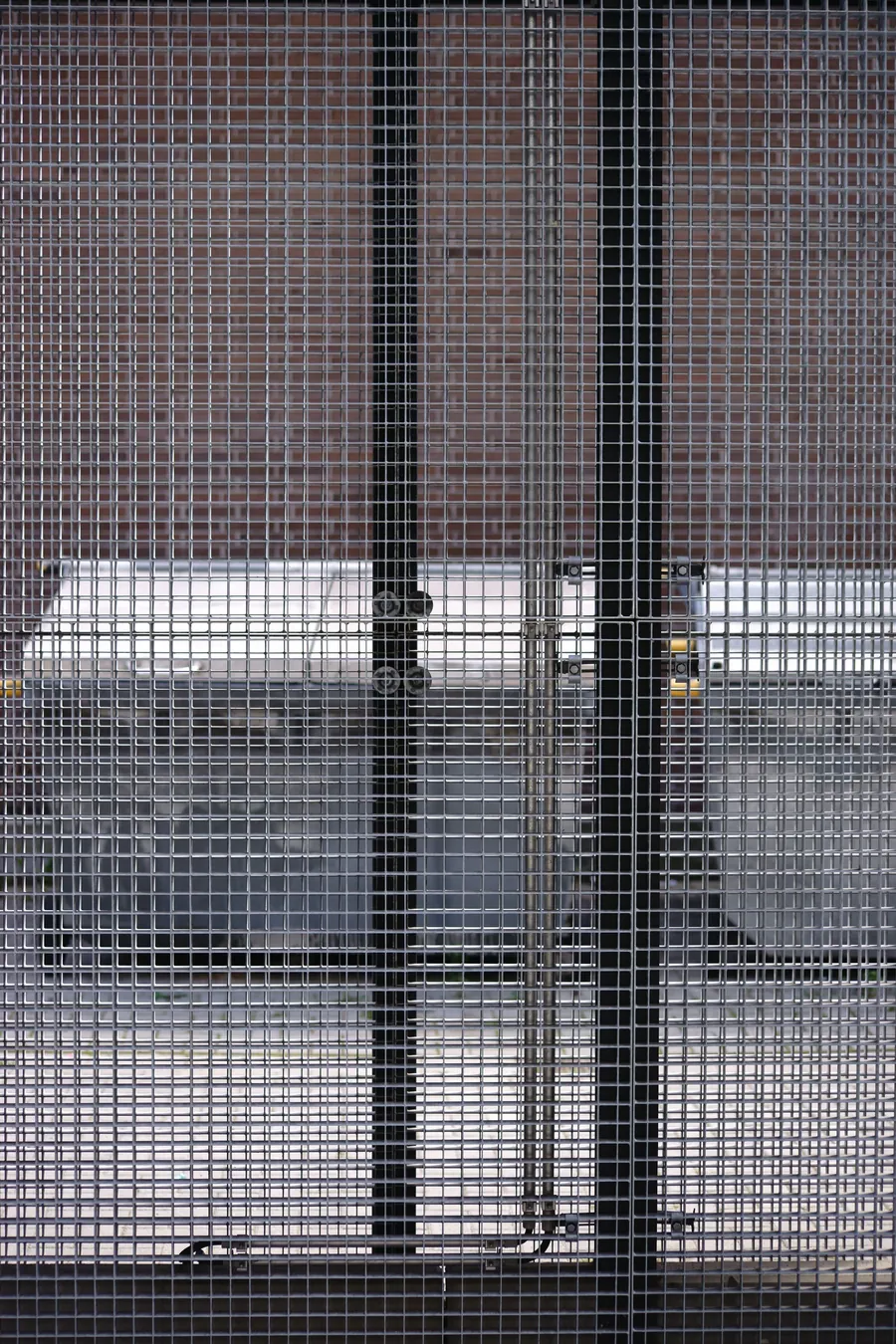
How a screen works with the garage door
A screen is fitted in addition to the garage door and does not replace it. It occupies the few inches between the door’s track and the opening, or mounts on the interior face of the wall.
Several conditions must be checked.
- Clearance beside and above the door track. Retractable sectional screens need a little room alongside the door’s vertical track and beneath its horizontal track.
- The operator. A rail-mounted operator in the center of the ceiling is usually no obstacle, since the screen’s tracks are at the sides. A wall-mounted operator leaves the most room.
- Low-headroom track. Where the door is hung on low-headroom hardware, space is tighter and the choice of screen may be limited.
- The floor. A screen seals at the floor with a flexible sweep. A badly sloped or broken floor makes a tight seal harder to achieve.
- Power. A motorized screen needs an outlet near the head of the opening.
- Interlock. The garage door must be fully open before the screen is lowered, and the screen raised before the door is closed. Some systems provide a sensor to prevent the operator from closing the door on a lowered screen.